
Sarah Bourne from The Churn Community Hub shares her reflections on partnership working within the Age Friendly Cotswolds initiative
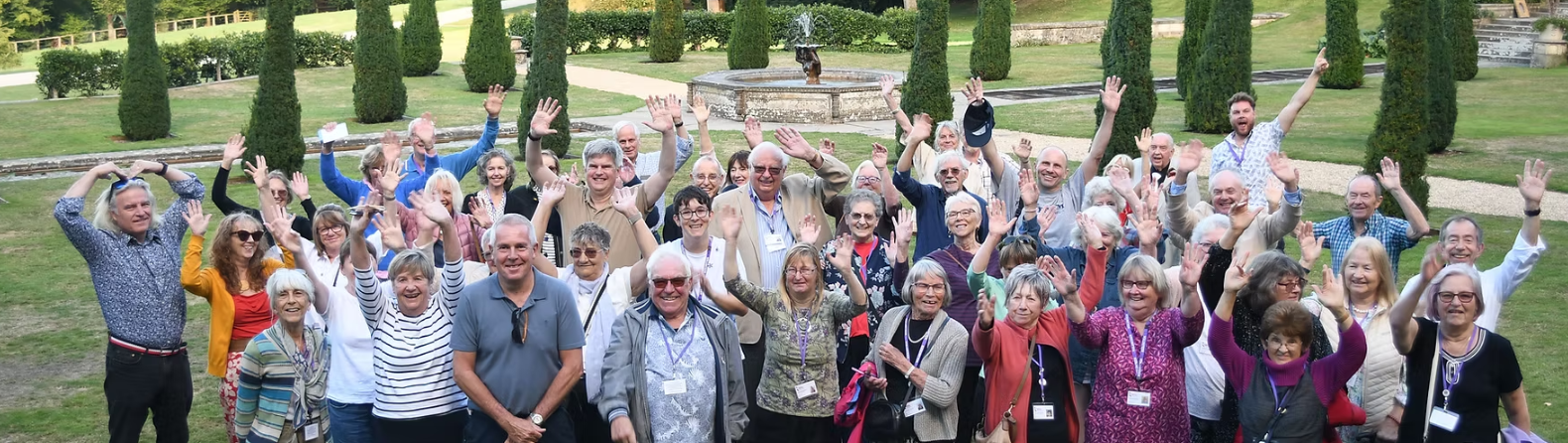
Photo credit Cotswold Friends/Age Friendly Cotswolds
In the last year, Age UK Gloucestershire, The Churn Community Hub, Cotswold Friends and Tetbury Area Youth & Community Trust (TAYCT) have been working closely together with their Cotswold communities in a new co-production and collaboration initiative called Age Friendly Cotswolds. The aim is to enable older people to feel more connected, valued, and able to shape the places where they live, so they can thrive.
Supported by The Summerfield Trust and facilitated by Gloucestershire VCSE Alliance, Age Friendly Cotswolds is one of five strands in an innovative investment strategy designed to bring grant-making decisions closer to the communities they serve. Research indicated that, though clearly a beautiful place to live, the Cotswold District also presents challenges for older people living rurally with limited transport options and often less opportunities for social connections and activities.
Sarah Bourne, CEO of The Churn Community Hub, says that the predominant theme she hears is that people want connection, to feel involved and feel valuable and, importantly, to have something to look forward to.
“It’s a simple one, but it’s the most important one,” she adds. “It’s a lifeline. This is one of the key things I keep hearing.”
Listening to the local communities is a key part of the new partnership approach. Instead of organisations providing services that they think older people need, the Age Friendly Cotswolds collaborative is involving older people directly and inviting them to contribute to their community. A current Age Friendly Cotswolds survey is part of this approach and has received 282 responses. But more of this below.
Each of the three placed-based charities hosts an Age-Friendly Champion, a dedicated member of staff focussed on listening to older people, strengthening connections, and developing practical, locally driven initiatives that are making a real difference.
Champions support Ambassadors, who are usually older people themselves. Their role is to amplify the voices of their peers, create new connections, and spark community-led initiatives. So far, each area has welcomed a small group of Ambassadors, and their insights are already shaping local priorities and activities.
Sarah says:
“I think we’ve seen older people as service recipients, so this is a twist around – ie what can we do together and how can older people contribute? And what puts people off from getting involved when they’re older? I think the way we try and communicate with people can put a lot of people off.
“We’ve done quite a lot of thinking around communications. Most people don’t see themselves as old. That’s the starting point. So, you have to think about how to promote things and get people involved. It’s moving away from seeing older people as a problem to solve. They either don’t access things because they don’t feel needy enough and don’t want to take things away from other people who may need it more, or they feel that it’s patronising.”
Age Friendly Cotswolds is rooted in the World Health Organisation’s Age-Friendly Communities Framework and focusses on four themes that reflect local priorities: health and wellbeing, social and civic participation, empowerment and resilience, plus impact and influence. The last priority underlines the importance of ensuring that older people’s voices can shape decisions in their own town or village.
This all sounds impressive, but how is the collaboration working in practice at an organisational level?
Sarah’s immediate response is positive.
“We’ve had to take a bit more time getting agreement and ways of working. When you have four organisations you have to take it at everyone’s pace and do things collaboratively, but it’s been great. A big part of the collaboration has been around the website and we have a joint Age Friendly Cotswolds logo.
“The initial partnership was the four organisations, but now we’re trying to increase it, so we can have conversations with everyone else in our locality through Age Friendly Network Forums which join things up. It’s not just about knowledge; it’s about not duplicating [services].”
Another example is the advice line that Age UK Gloucestershire run.
“If they can come to our location with that, it benefits them because then they have that cohort of people coming. But, also, we don’t have to worry about giving people advice as we then have specialists in place doing it.
“It’s joining things up – something we talk about a lot, but we don’t always do.”
As mentioned, the other major areas of the partnership are the Ambassadors and the volunteers - the people who are leading on co-production.
Sarah adds:
“Everyone’s doing that a bit differently, but that’s okay: it’s how you define it. We have one Ambassador who runs a café through the Women’s Institute, but she now runs that as part of Age Friendly Cotswolds, so we can help signpost people to this and provide funding from the Community Chest if needed, and so help it to be sustainable.”
The grant from The Summerfield Trust includes a substantial fund to be used as a Community Chest, giving older people a direct role in deciding how resources are invested in their communities.
The new co-production approach also involved a shift in mindset and trust.
Sarah explains:
“Getting your head round doing it differently - it’s a massive learning. It sounds easy, but it’s not. Having to let go of the responsibility and control - it’s a new way of being.
“It feels quite brave to do – it’s enabling the community to have more control and helping smaller organisations who might be struggling. It would be easy to keep the money for ourselves, but actually we’re here to offer a service and it’s about not doing everything yourself.”
On this, one of the surprises from the project, Sarah says is how remarkably well the partnership is working, despite the different sizes of the organisations. But the response from the older communities is the most welcome surprise of all.
“There’s been a huge interest. The amount of people who’ve wanted to do the activities has been surprising. Being active – it’s a massive thing. We started with a gentle exercise class and it filled up straightaway, so we added extra classes and a lunch afterwards.
“We have tai chi, dancing and then the exercise class, so already there’s quite a good mix in the week. People are saying that they can bend better, for example, and that their mobility’s improved. It’s been surprising how popular this has been. It’s good to hear and really important for being healthy for longer.”
Headline stats from the 282 respondents to date in the Age Friendly Cotswold survey include the following:
78% value local shops, community spaces and accessible services to help them stay independent and connected.
42% find it difficult to get around without a car, highlighting the need for good transport options.
48% report a long-term physical or mental health condition.
The comments below from the survey also reinforce the importance of what ageing well means to people.
“Social contact is important to me. I lost my husband, so the friends I have made through The Churn mean everything to me otherwise I would be on my own.”
76-year-old respondent“Meeting people and company. I live on my own in a one bedroomed flat, so getting out with others is so important.”
87-year-old respondent“Meeting up with other people, to talk about anything from health to day-to-day worries that I don’t feel I need to see the GP for. Companionship and support are really what I need. Being able to have social contact prevents me from feeling isolated.”
93-year-old respondent
On 1 October an event to mark the International Day of Older People was attended by NHS and council representatives, local residents and community organisations. The ‘Rethinking Ageing’ event attracted around 130 people across most sectors demonstrating the inclusive nature of the project and the desire to build supportive communities across the Cotswolds.
Essentially a pilot programme for Gloucestershire, it’s hoped that the Age Friendly Cotswolds blueprint will be adopted in work with older people county-wide.
Sarah says:
“We want to really evidence the importance of investing in a place-based approach with the local people in the community. If you do that then you get better outcomes and better value of money. It’s also looking at community resilience and getting a movement going to make things sustainable.
“There’s a real appetite for it to go county-wide, so the next step is for organisations to take it on, perhaps at in the voluntary sector, first of all.”
In Sarah’s view, the Summerfield Trust has been quite brave with its funding and by providing long-term investment in specific areas, the Trust has taken a more strategic approach, instead of the more usual process of offering organisations smaller grants over a shorter time frame.
She adds:
“It’s quite refreshing to be able to do something and show the impact over time.”
There’s still time to fill in the Age Friendly Cotswolds survey: