
Find out more about the Age-friendly Employer Pledge from Alan Inman-Ward, CEO of Age UK Gloucestershire
The Age-friendly Employer Pledge from the Centre for Ageing Better is a commitment made by employers to celebrate the value of older workers. It is free to sign-up and is open to employers across the UK. Age UK Gloucestershire have recently signed the pledge, so we spoke to their CEO, Alan Inman-Ward to find out more.
Why did Age UK Gloucestershire decide to sign up to the Age-friendly Employer Pledge?
More than three years ago, we were reviewing our approach to Equality, Diversity and Inclusion. At the time, our vision was to make Gloucestershire the best place to grow old in, and employment is an important part of that.
Many older people face barriers when trying to return to work or remain in employment. Too often, workplace policies fail to consider their needs, undervalue their experience or unintentionally create disadvantages.
The Centre for Ageing Better highlights the employment gap facing people aged 50-65. Only 65% of people in this age group are in work, compared with 85% of those aged 25-54. The gap is significantly larger than in many other countries (https://ageing-better.org.uk/work-state-ageing-2025)
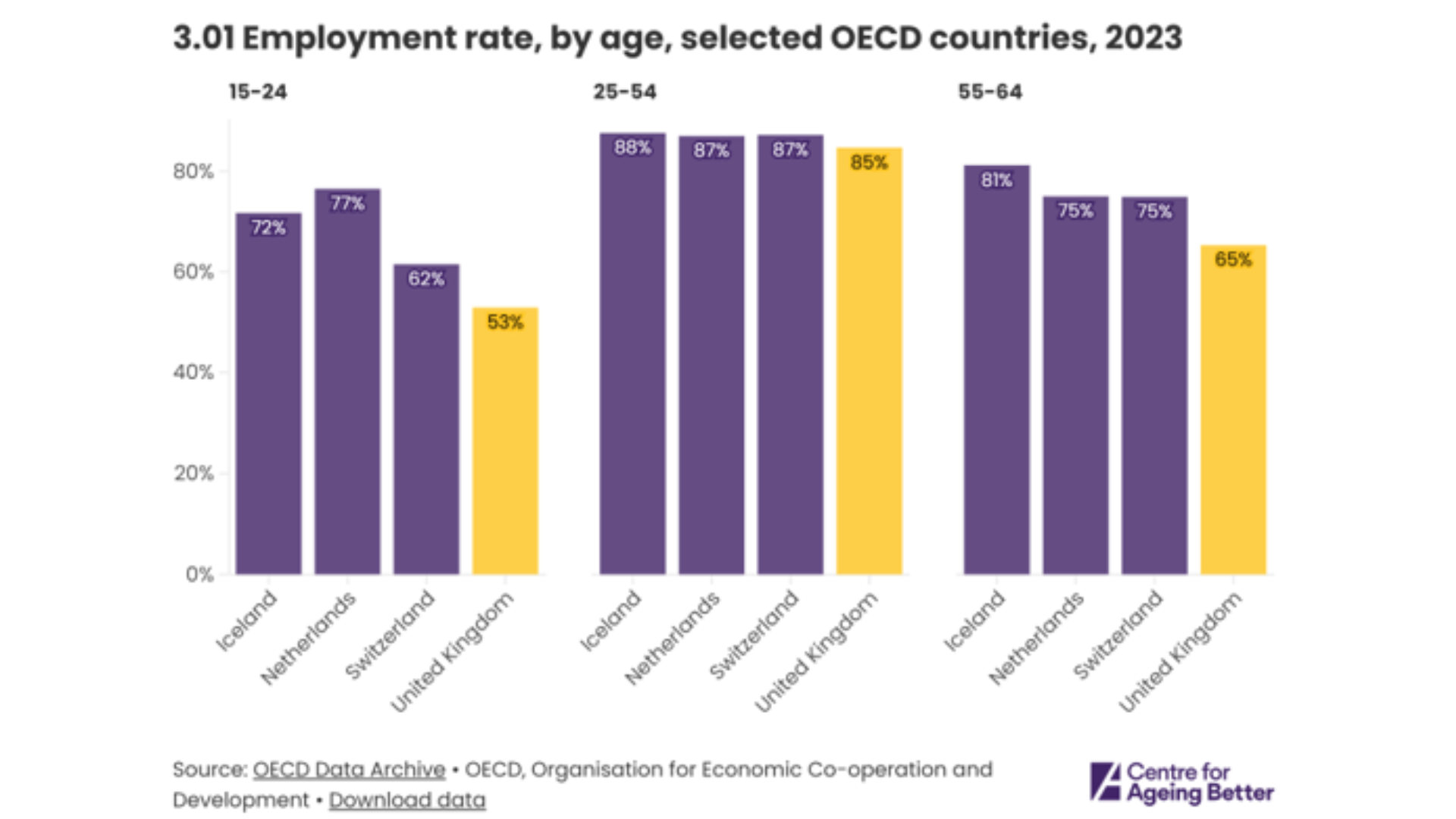
Employment rate, by age, selected OECD counties, 2023 (Centre for Ageing Better)
This graph illustrates the disparity between employment rates for those aged 50 - 65, compared with those aged 25-64 in the UK.
The Age-friendly Employer Pledge provides a practical way for organisations to show they value older workers, are committed to improving work for people in their fifties and sixties, and are taking action to help them thrive in a multigenerational workforce.
For us, signing the pledge was an obvious step. It aligned with our values as an employer and gave us an opportunity to encourage other organisations across Gloucestershire to think differently about older workers.
What do you think are the biggest challenges facing workers aged 50+ today?
The biggest challenge faced by older workers is ageism. It can happen throughout the employment journey, from recruitment and career progression to leaving the workplace. Research shows that 36% of people aged 50-69 feel disadvantaged when applying for jobs because of their age.
Ageism remains one of the most socially accepted forms of discrimination. We see it every day, from the language we use to the stereotypes we reinforce without thinking. Even though this is something I care deeply about, I recently caught myself saying, "I'm feeling my age."
Language matters. For decades, we've normalised talking down older people and, in doing so, our future selves. Much of this discrimination is unconscious and rarely intended to cause harm, but that doesn't lessen its impact.
Older workers can face these barriers every day while trying to find or stay in work. While we've rightly made progress in removing barriers for younger people, we should also be asking how recruitment can be more accessible and equitable for older applicants.
Simple changes can make a difference. Employers should avoid language that suggests they're looking for younger candidates and think carefully about qualification requirements that may unintentionally disadvantage people such as referencing more recent qualifications such as GCSEs)
What changes have you made since adopting the pledge?
We've always been proud of the wide range of ages represented across our colleagues, volunteers and trustees.
One reason for this is our commitment to flexible working. We have 50% more part-time than full-time colleagues, We've also worked hard to ensure our imagery reflects people of different ages, helping potential applicants see themselves working or volunteering with us.
Today, around half of our workforce is over 50, and there is almost 50 years between our youngest and oldest colleague.
I'm passionate about ensuring everyone has opportunities for personal development. We've encouraged all colleagues to consider how they would like to grow and develop, and I'm pleased that many people, particularly older colleagues, have embraced those opportunities.
We've also developed policies that support people throughout their lives, including flexible working, sick pay from day one and life assurance, regardless of whether someone joins the workplace pension scheme.
Most importantly, we live our value that “we value time”. We want people to have the support, flexibility and opportunity they need to thrive, and we're always looking for new ways to make our workplace more inclusive.
What benefits have older employees brought to Age UK Gloucestershire?
Older colleagues bring enormous value to our organisation.
Many have lived experience of the issues facing the people we support and provide insights that help us deliver better services.
They often build trust quickly with the people who use our services and create strong relationships with colleagues, volunteers and partners.
They also bring perspective, experience and plenty of stories, which adds a great deal of warmth and humour to the workplace.
Many of our older colleagues are incredibly flexible. They regularly step forward to help when we're short-staffed, support new projects or attend events. Their willingness to contribute often goes far beyond their job description.
Those who have been with us for many years also help us learn from the past. They can tell us what's been tried before, what worked and what didn't, which gives us a better chance of succeeding in the future.
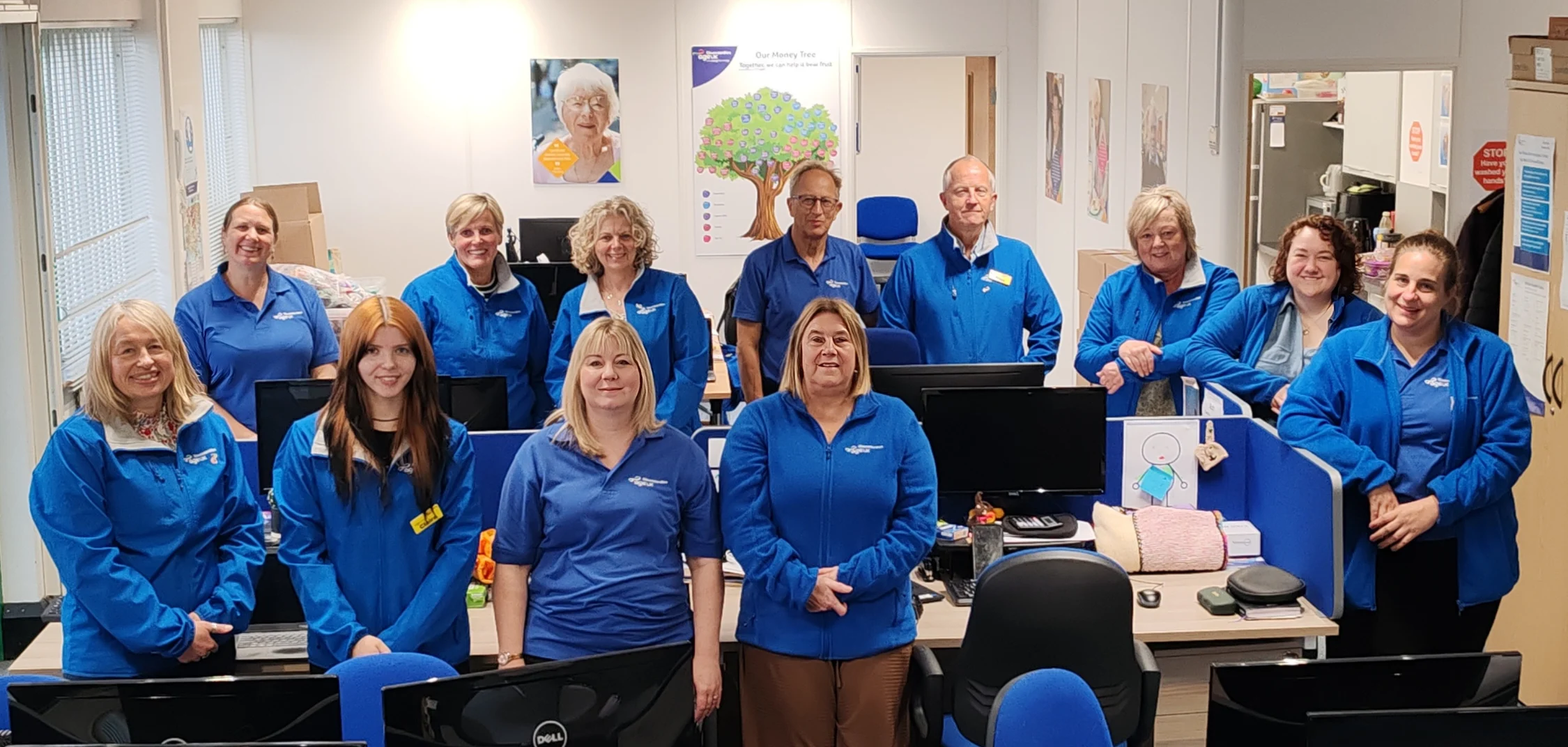
Age UK Gloucestershire colleagues (Photo credit: Age UK Gloucestershire)
What more could employers across the VCSE sector do to recruit and retain older workers?
My first recommendation would be simple: sign up to the Age-friendly Employer Pledge. The support available helps organisations consider their practices and identify practical ways to become more inclusive and equitable for older colleagues.
Take a look at your recruitment materials and imagery. Make sure people of different ages can see themselves in your organisation, but avoid outdated stereotypes. Older people today are active, diverse and living very different lives to previous generations.
When you're promoting a cycle-to-work scheme, don't automatically picture someone in their twenties. There are plenty of people in their seventies cycling to work every day.
Review your policies through the lens of age. Just as many organisations have worked hard to de-gender language, we should also consider whether our policies support colleagues in their fifties, sixties and beyond.
It's also important to remember that older people are not a single group. They may be carers, parents, disabled, LGBTQ+ or from any number of different backgrounds. Many won't even consider themselves "older people".
Treat people as individuals. Create environments where they can thrive, just as we do for younger colleagues. We will all benefit from this small action.
Finally, think about the language you use. Let's challenge the casual phrases and assumptions that suggest people become less capable simply because they've got older.
In doing so, we stop discriminating against our future selves, and make our workplaces more inclusive and equitable for older people, which benefit colleagues of all ages.
You can find out more about the Age-friendly Employer Pledge by visiting the Centre for Ageing Better website: https://ageing-better.org.uk/employer-pledge
It is free to sign-up and is open to employers across the UK.
Age UK Gloucestershire is an independent, local charity working in the community to support older people, their families and carers. You can find out more about their work by visiting their website: https://www.ageuk.org.uk/gloucestershire/